


.svg)
Freight Management for Data Center Infrastructure Suppliers
Your Products Power AI. Your Transportation Should Too.
Hyperscalers choose infrastructure suppliers based on reliability. That means on-time delivery, consistent carrier performance, and transportation operations that scale as fast as production does. Shipwell is designed for the manufacturers and contractors who can't afford to let freight be the reason a project falls behind.
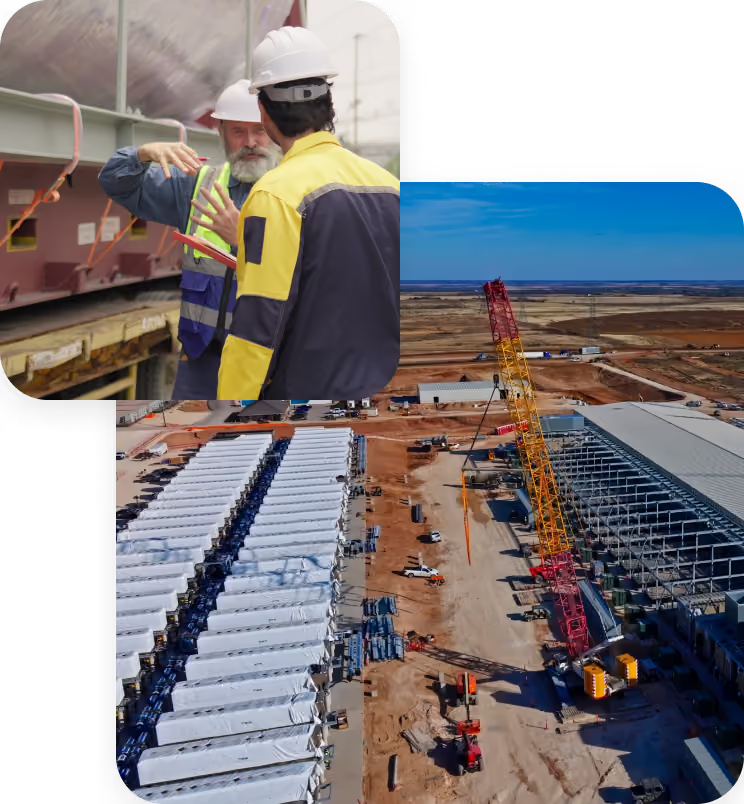

Built for Every Company the Buildout Depends On
Transformers, switchgear, cooling systems, prefabricated assemblies — each plays a distinct role in getting a data center online. And each comes with its own freight profile, carrier requirements, and delivery constraints. Shipwell handles all of them.
Cooling Systems
Power Transformers
Wire & Cable
Switchgear & Electrical Equipment
Prefabricated Assemblies
Oversized & Utility Equipment
What Transportation Looks Like When It's Working at Scale
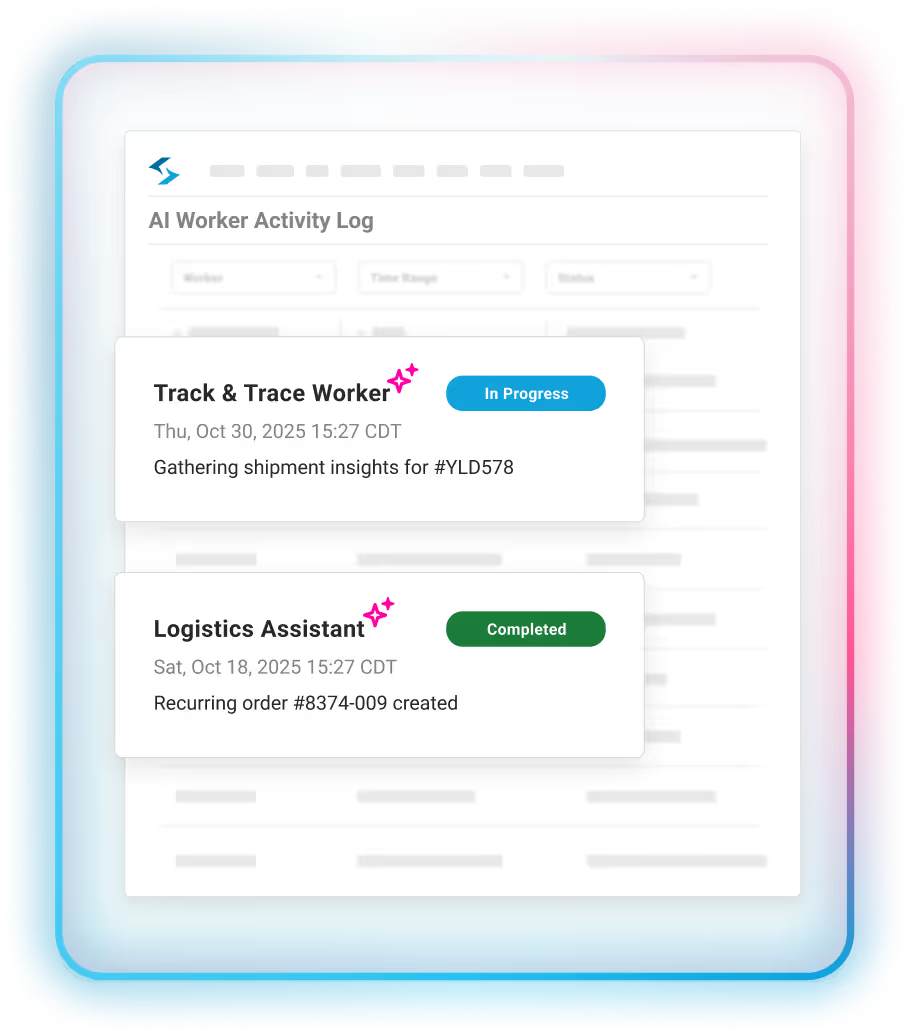

70% less time on manual tracking
Customers using Shipwell's Track & Trace AI Worker cut track-and-trace emails by 90% and reclaimed hours spent chasing shipment status
88% reduction in shipment management time
A global industrial equipment manufacturer consolidated freight operations in Shipwell and freed their team from manual coordination
Over 20 standardized reports, one data architecture
One U.S. AI energy infrastructure manufacturer connected Shipwell to their CRM, project management tool, and ERP through a single shared system
$111,000 flagged in a single transaction
Shipwell's AI-powered settlements process caught an accounting error on first use that manual review would have missed
Every mode in one platform
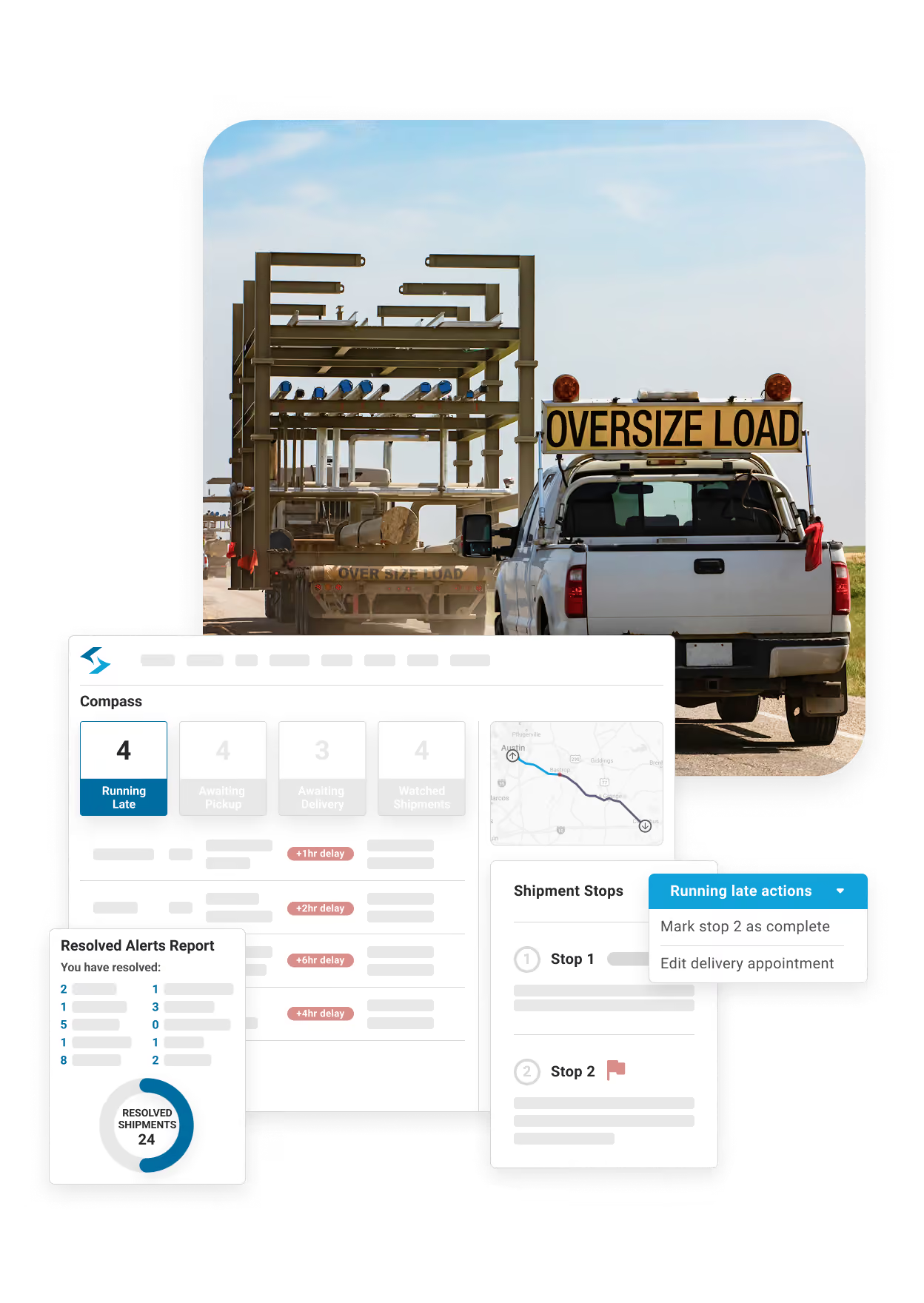
Flatbed, heavy haul, LTL, rail, and specialized carrier moves for the same project, visible and executable from a single operational view
The Hidden Supply Chain Behind AI Infrastructure
AI runs on transformers, switchgear, and cooling systems — and the companies building them face a logistics operation most people never see. Here's what's at stake.

How Scaling AI Infrastructure Starts with Transportation
The suppliers winning more work aren't just building better products. They're building transportation operations that scale. Here's what that looks like.

The Logistics Playbook for AI Infrastructure Manufacturers
Evaluating a TMS for AI infrastructure manufacturing? Here's what to look for in multimodal freight management, project logistics, and logistics automation.

More Projects, Same Team, Higher Stakes
The AI infrastructure buildout is accelerating faster than most transportation operations were designed to handle. Project schedules are tighter, freight is heavier, and the cost of a missed delivery window isn't just a logistics problem — it's a commissioning delay, an idle construction crew, and a conversation with a hyperscaler about whether you're the right supplier for the next project.

Project Coordination
Placeholder Text

Multimodal Complexity
Placeholder Text

Schedule Risk
Placeholder Text

System Connectivity
Placeholder Text

Scaling Without Headcount
Placeholder Text

Freight Spend Control
Placeholder Text
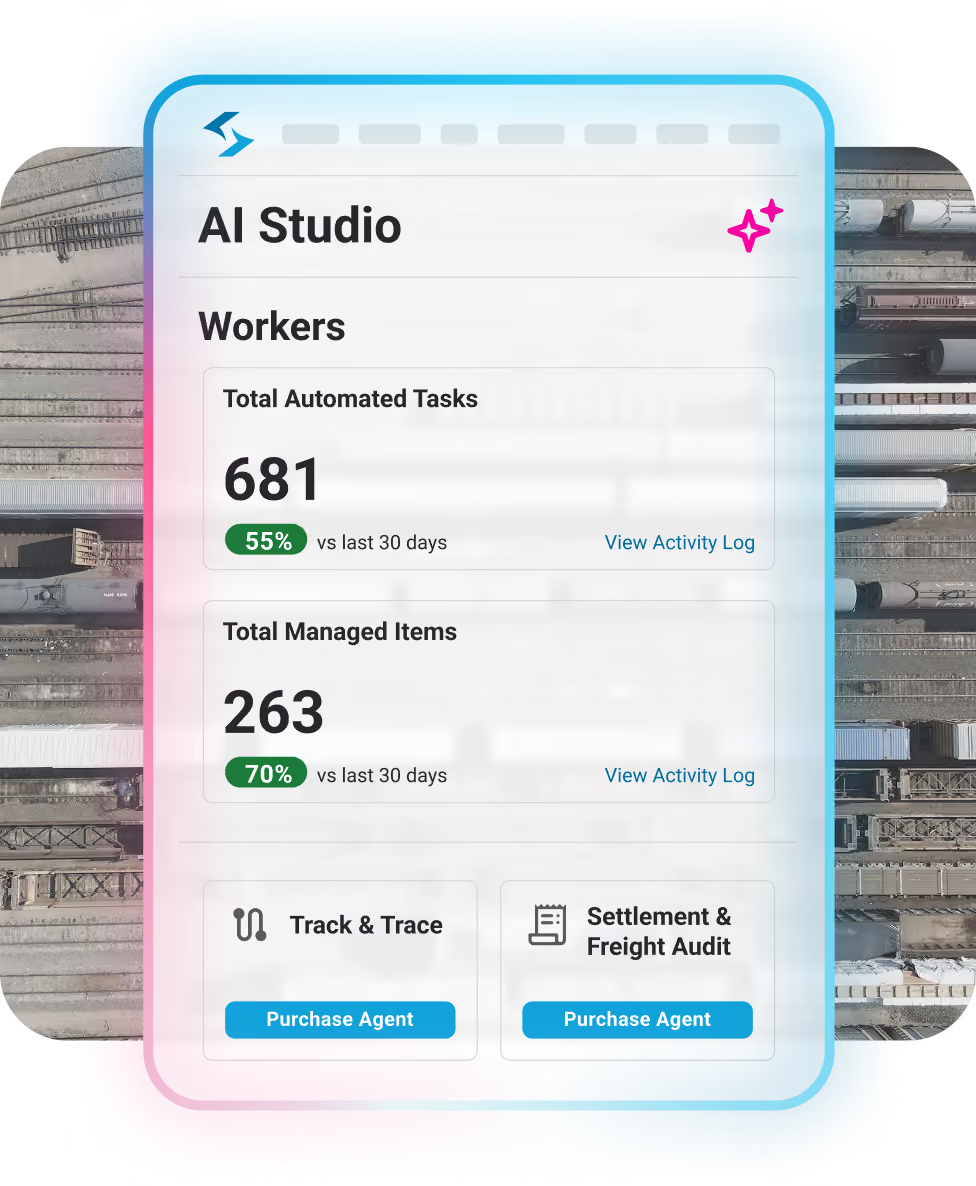
AI That Helps Your Transportation Team Do More
Transportation teams don't need another dashboard. They need technology that helps them get work done.
Shipwell's AI-powered transportation platform monitors shipments, identifies potential issues, automates routine tasks, and helps teams respond faster when disruptions occur—freeing up valuable time for higher-value work.
Logistics teams in the manufacturing space share similar shipment challenges:
Keep Building the Future. We’ll Help You Keep it Moving.
Whether you're shipping transformers, cooling systems, electrical equipment, or mission-critical infrastructure, Shipwell helps transportation teams simplify operations and deliver with confidence.
Frequently Asked Questions
Does Shipwell support the freight profiles common in AI infrastructure manufacturing?

Yes. Shipwell supports flatbed, heavy haul, LTL, truckload, dedicated, rail/intermodal, and specialized carrier moves natively — including the multi-leg, project-based shipments common in transformer, switchgear, cooling system, and prefabricated assembly manufacturing. Each freight leg connects under a master shipment ID so your team, project managers, and carriers are always working from the same information.
How does Shipwell connect to our existing ERP and business systems?
Shipwell integrates with leading ERP systems including NetSuite, Infor, and SAP via API, syncing shipment data automatically through a shared identifier so every system stays current without manual updates. For companies running more complex multi-system environments, Shipwell's MCP Server enables transportation data to flow directly into the AI tools and enterprise platforms your team already uses.
How long does implementation take for a manufacturer with complex operations?
Most manufacturing teams start seeing value in weeks, with full rollout based on complexity, integration needs, and number of facilities.Implementation timelines vary based on the number of facilities, freight modes, carrier relationships, and system integrations involved. Shipwell's onboarding approach is designed to get teams to measurable results faster than traditional enterprise TMS deployments, with structured support through the first 90 days. More details about our implementation process can be found in this article.
We already have a TMS. What makes Shipwell different?
Most TMS platforms were built around high-frequency, standardized freight. Shipwell is designed for operations where freight is complex, multimodal, and tied to external project schedules — and where transportation data needs to flow across ERP, project management, and customer systems automatically. The combination of AI Workers that actively execute tasks, one operational view across every mode, and deep system integration is what differentiates Shipwell for manufacturers in this space.
How does Shipwell help our team manage more volume without adding headcount?
Shipwell's AI Workers handle the routine, high-volume work that currently consumes your team's day — continuous shipment monitoring, exception alerts, carrier performance tracking, and freight invoice validation. This frees your existing team to focus on decisions that require judgment, not status updates. Customers using the Track & Trace AI Worker have seen a 70% reduction in manual tracking overhead and a 90% cut in track-and-trace emails.
Is Shipwell recognized by independent analysts?
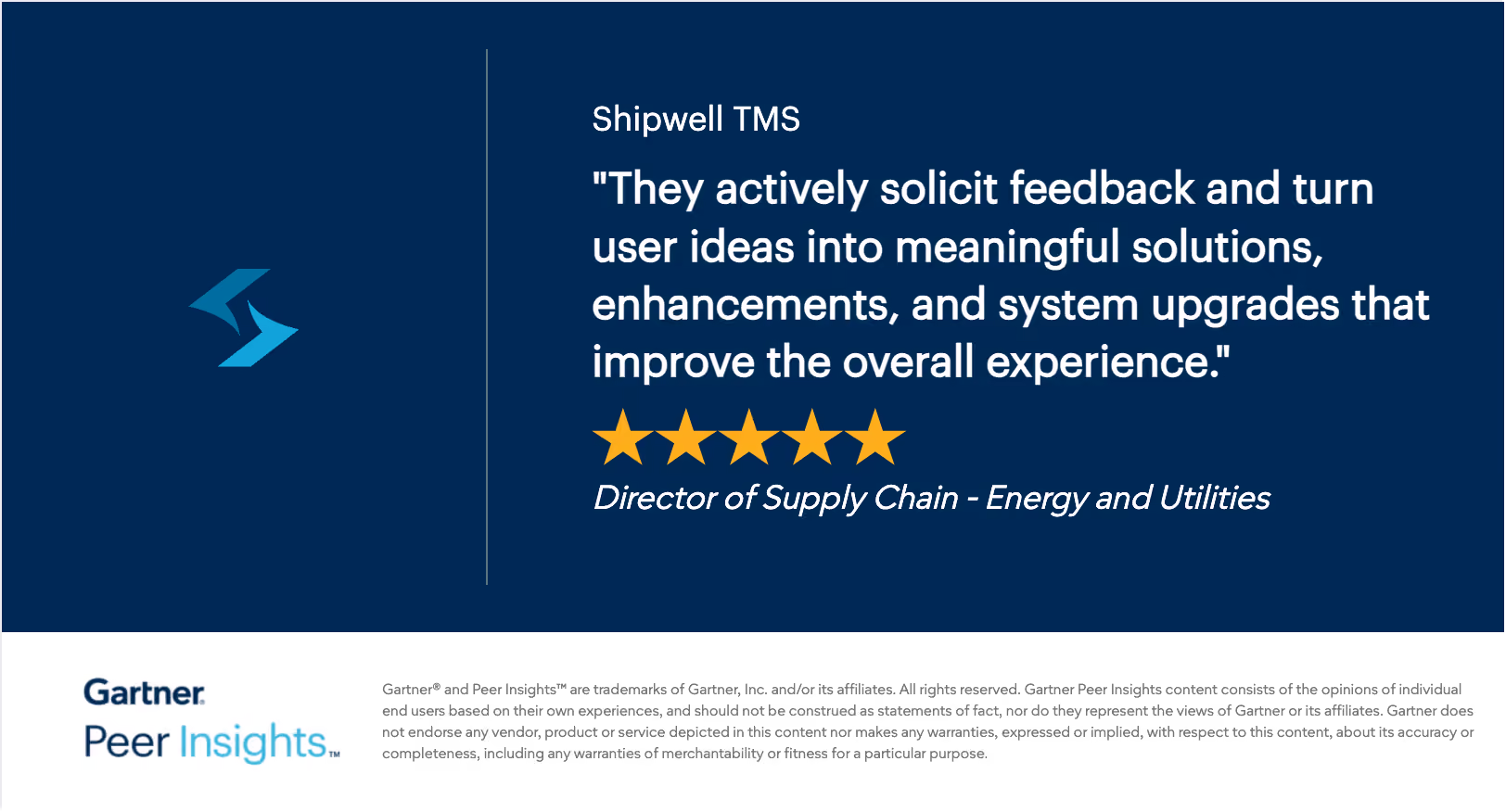
Yes. Shipwell has been named a Visionary in the Gartner® Magic Quadrant™ for Transportation Management Systems for six consecutive years, recognized for AI-integrated capabilities and a focus on delivering measurable ROI for shippers managing complex, high-volume freight operations.
