.svg)


How AI TMS Improves Tendering and Shipment Tracking

Key Takeaways

- AI-powered transportation management systems help transportation teams automate tendering, improve real-time shipment visibility, reduce manual logistics work, and make faster decisions across multimodal shipping networks
- Real-time shipment visibility flags exceptions automatically, replacing check calls with proactive alerts
- Evaluate any AI claim by asking whether the system learns from data or just follows fixed rules
A dispatcher can spend 40 minutes on the phone just finding a carrier willing to take one load. 40 minutes that could have been spent doing just about anything else.
Freight teams have added transportation management system (TMS) software for planning and tracking over the years, but a lot of the tender-to-delivery work still runs through phone calls and manual data entry. Contracted rates lock in once a year, but spot rates move with market conditions on a near-daily basis. Shipment mix also shifts by lane, so a static workflow rarely keeps up. That gap between what a TMS can do and what a team actually automates is where freight costs and service failures pile up.
This piece breaks down how a modern, AI-powered TMS automates tendering and shipment tracking, and what separates real AI from a feature that just wears the label.
How Do AI-Powered Transportation Management Systems Improve Tendering and Shipment Tracking?
AI-powered transportation management systems automate carrier selection and shipment tracking so freight teams spend less time chasing status updates and rekeying data. The system evaluates rate and performance to run tendering workflows without the back-and-forth of phone calls, then keeps watching each shipment in real time once it moves. It surfaces exceptions early, flagging delays before a customer has to ask, and applies that same logic across multimodal networks mixing over-the-road, rail, and drayage. The result is less manual coordination at every step, from the first tender to the final delivery update.
Why Manual Tendering Workflows and Tracking Slow Freight Teams Down
Manual tendering pulls skilled planners into repetitive work a system should be doing instead. A planner might call three carriers before finding capacity, then re-key the accepted rate into a separate system by hand. That's real time lost on every load, multiplied across dozens of shipments a day.
Tracking has the same problem. Without built-in visibility, "where's my shipment" becomes a full-time job of check calls and carrier portal logins. None of that work improves service, and it eats hours a team needs for actual problem-solving.
The result shows up in the numbers logistics leaders already track: rising exception rates and freight costs that creep up because nobody has time to shop every lane. Peak season volume or a sudden capacity crunch turns that slow process into a real risk to on-time delivery. Automating tendering and tracking, the two workflows generating the most manual touches, is where the fix starts.
How Transportation Management Systems Improve Multimodal Shipping Visibility
A TMS built for multimodal shipping pulls tracking for truckload, LTL, intermodal, rail, drayage, parcel, and ocean containers into one screen. Instead of logging into a separate portal for every mode or carrier, a team sees the full shipment picture in one place.
That single screen is also where shipment visibility stops being a separate lookup. Status, location, carrier activity, and exceptions live in the same record as the rate and tender history, so nobody has to piece together what happened from three different systems.
- One view of every shipment across modes instead of one portal login per carrier
- Status, location, and exception data attached to the same record as the tender
- Carrier performance builds from the same data, so scorecards need no extra work
How Built-In AI Improves Transportation Optimization
A tendering workflow built on AI optimization evaluates carriers the way an experienced planner would, just faster and across every lane at once. It weighs rate and carrier performance, then tenders the load to the carrier most likely to accept and deliver on time. If that carrier passes, the system moves to the next option in the waterfall automatically.
This matters most in multimodal shipping, where a single network might mix over-the-road, LTL, rail, and drayage. A planner comparing modes by hand has to pull rates and transit times from separate systems before choosing. An AI-powered TMS runs that comparison in seconds and applies it consistently across every load.
That consistency compounds across a full network. A system applying the same logic to a hundred loads a week catches savings a person would only find by accident, without adding headcount as volume grows.
Automated tendering does not remove judgment from the process, it removes the busywork around it. A planner still sets the rules and can override any tender; the system just applies them consistently.
Tendering is just one place built-in AI optimization shows up. The same models support route and mode choice, cost control, service-level tracking, and exception prediction, and each gets sharper as delivery history accumulates. That's what separates a single automated feature from real logistics automation running underneath the whole network.
How Automated Tendering Workflows Reduce Manual Work
The workflow starts the same way an experienced planner would start it: the system picks a carrier from the carrier selection pool based on rate and past performance, not whoever happens to answer the phone first. It sends the tender, then waits for the carrier to accept or reject.
A rejection doesn't stall the load. The system rolls to the next carrier in the waterfall automatically, and every response, accepted or not, gets written back to the shipment record instead of a notepad or an inbox. What disappears for the planner is the phone calls and the re-keyed rates.
- Carrier selected by rate and performance, not by whoever answers the phone first
- Tenders sent, tracked, and escalated by the system
- Fallback carriers fire on their own, nobody watches the clock
- Every acceptance and rejection logged against the load instead of an inbox
Real-Time Shipment Visibility Matters
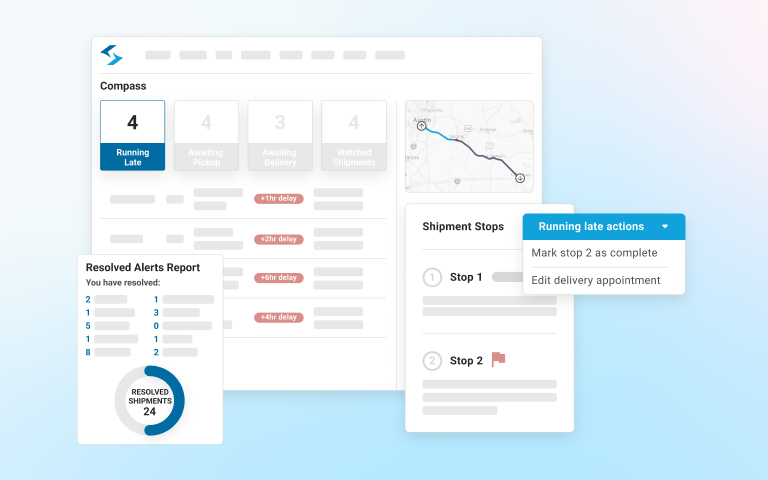
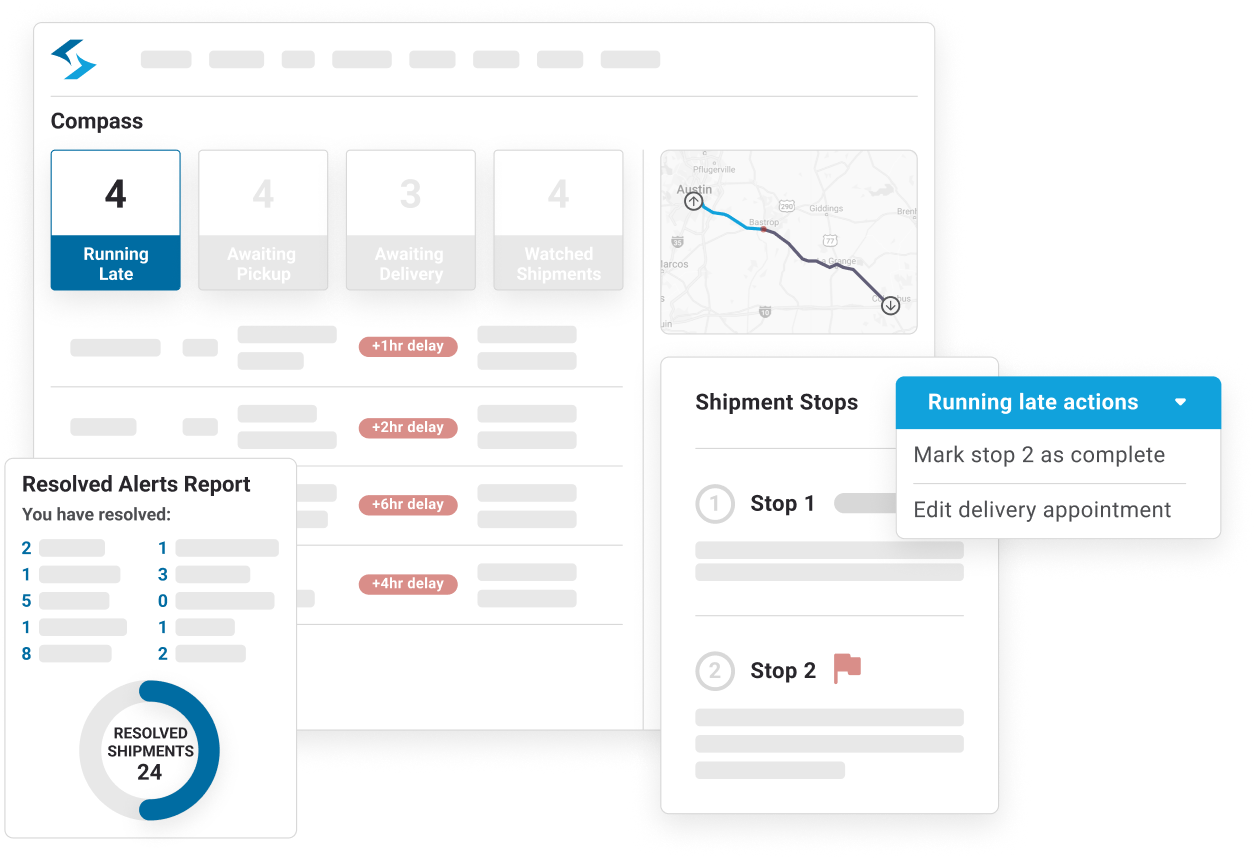
Real-time shipment visibility means a team learns about a delay from the system, not from a customer call. Built-in AI monitors carrier and milestone data continuously, then flags the shipments that need a human to step in.
A load that misses its check-in window by two hours illustrates the gap. A manual process catches that only if someone happens to look; an AI-powered system flags it the moment it happens, giving the team time to act.
That shift, from chasing status to reacting to flagged exceptions, is what gives operations teams their time back. Teams put it toward calling the customer before the customer calls them, and on-time delivery numbers start to move. That same data also feeds broader supply chain visibility, surfacing patterns in carrier performance and lane risk over time.
How Tendering and Tracking Work Together in an AI TMS
Tendering and tracking aren't two separate tools, they're one loop. Tendering decides who moves the load; tracking manages it once it's moving.
The on-time and exception data tracking collects feeds directly back into the next tender, so carrier performance scores come from actual delivery history instead of a spreadsheet somebody updates once a quarter. That loop is what lets the system get smarter with every load instead of running the same static logic forever.
What to Look for in Transportation Management Software with AI and Real-Time Visibility
Not every feature marketed as AI actually behaves like AI. Some tools apply fixed rules dressed up in AI language; others project savings instead of measuring them. Before trusting a vendor's claims, ask whether the system learns from performance data or just follows a fixed rulebook.
That question, paired with the list below, covers what actually separates a real platform from a feature list:
- Built-in AI optimization, not a rules engine with an AI label
- Automated tendering workflows with waterfall fallbacks
- Real-time shipment visibility across the whole network
- Multimodal shipping support, including truckload, LTL, intermodal, rail, drayage, and parcel
- Exception management that flags problems before customers do
- Carrier performance insights built from delivery history
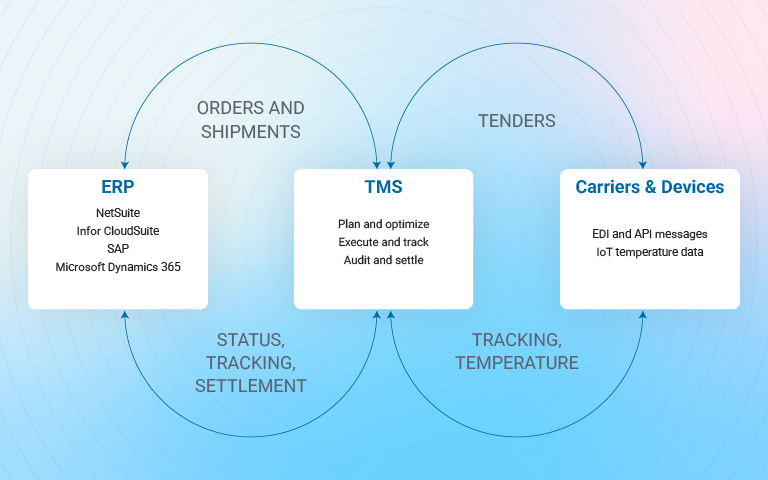
- Integrations with the systems already in place, from ERP and WMS to ELDs
- Reporting and analytics the operations team can read without help
- Ease of use for the people tendering loads every day
Ask for case studies from shippers running your volume and mix of modes, not aggregate stats, then weigh implementation effort against the manual cost you're already absorbing today.
How Shipwell Supports AI-Powered Tendering and Shipment Visibility
Shipwell runs its AI Workers and connectors inside a single transportation management system. The Track and Trace AI Worker monitors shipments around the clock and contacts carriers when something slips. The In-App AI Assistant creates orders and runs workflows from plain language, and the MCP Server connects outside AI tools to live shipment, tender, and invoice data.
Shipwell was named a Visionary in the 2026 Gartner Magic Quadrant for Transportation Management Systems.
Actionable Takeaways
- Automate tendering first for the lanes with the most manual touches, then expand
- Treat multimodal comparisons as a single AI-driven decision, not separate manual lookups per mode
- Set exception thresholds so tracking systems flag problems before a customer has to ask
- Vet any AI claim by asking whether the system learns from data or runs on fixed rules
- Weigh onboarding effort against the manual cost of running tendering and tracking by hand today
- Run any vendor you're evaluating through the nine-point list above before signing anything
See What Automation Could Save Your Team
Every hour spent chasing carrier updates is an hour not spent catching the next exception before it costs you. Book a demo to see how AI-powered tendering and tracking would work across your network. Want a number before you get on a call? Run your own shipment volume through the Track & Trace ROI Calculator to see the labor and cost savings available to your team.
Frequently Asked Questions
How do transportation management systems improve multimodal shipping visibility and automation?
A TMS with real AI connects multimodal tendering and shipment visibility into one workflow. It compares rates and transit times across modes to automate carrier selection, then keeps monitoring after tender, flagging exceptions automatically. That combination cuts manual touches and reduces surprises, rather than treating tendering and tracking as separate tools.
Which transportation management systems automate tendering and tracking workflows?
Shipwell automates both through its AI Workers, including the Track & Trace AI Worker for shipment status and exceptions. For tendering, it evaluates carrier rate, performance, and capacity for every load through their RFP Automation tool, which then tenders automatically to the best match.
Can AI-powered tendering handle multimodal shipping?
Yes. AI optimization compares rates and transit times across modes, including over-the-road, LTL, rail, and drayage, in real time, removing the manual step of checking each mode separately. That matters most for shippers running mixed networks.
What's the difference between rule-based automation and real AI in a TMS?
Rule-based automation follows a fixed script that doesn't adapt. Real AI learns from ongoing performance data and adjusts as conditions change. When evaluating a TMS, ask whether a feature adapts over time or just executes a static rule.
What transportation management systems offer strong real-time shipment visibility?
Shipwell offers real-time visibility through AI that monitors carrier and milestone data continuously, flagging exceptions the moment they occur. That replaces manual check calls with automatic alerts, giving teams time to act before a delay reaches the customer.
Does AI tendering remove the planner from the decision?
No. A planner still sets the rules, like preferred carriers and rate limits, and can override any tender. AI removes the repetitive work of applying those rules to every load, not the judgment behind them.
How fast can a team see results from AI-powered tendering and tracking?
Results vary by volume and process maturity, but the fastest gains come from automating tendering and tracking first. Shipwell customers using the Track & Trace AI Worker report automating most manual tracking updates shortly after rollout.
Which transportation management software includes built-in AI for optimization?
Shipwell runs AI Workers and connectors inside its transportation management system. The Track and Trace AI Worker monitors shipments around the clock and contacts carriers when something slips. The In-App AI Assistant creates orders and runs workflows from plain language, and the MCP Server connects outside AI tools to live shipment, tender, and invoice data. Shipwell was named a Visionary in the 2026 Gartner Magic Quadrant for Transportation Management Systems.