.svg)


6 Reasons Shippers Are Sponsoring Their Carriers' EDI Programs

Key Takeaways

- Carrier compliance issues are most commonly caused by manual data exchange.
- Sponsored carrier EDI helps shippers eliminate manual updates, improve carrier compliance, and gain real-time shipment visibility. Most shippers achieve ROI within one year.
- By paying for EDI implementation on behalf of carriers, shippers reduce operational costs, improve service performance, and scale their networks more efficiently.
Manual logistics processes drive up to 30% higher operational costs due to rework, errors, and delays. The real challenge here is that visibility, accuracy, and compliance lag behind freight. When carriers log into your transportation management system (TMS) manually you inherit:
- Late or missing status updates
- Inaccurate timestamps
- Delayed exception alerts
- Invoice disputes
The root cause is connectivity. Carriers won't invest in Electronic Data Interchange (EDI) for a single shipper relationship. But shippers who wait for carriers to modernize on their own absorb all the friction.
That's why forward-thinking shippers are sponsoring EDI implementation for their highest-volume carriers. For roughly $2,000 per carrier—less than the cost of a single service failure—you can eliminate the manual processes eroding your network's performance. At just 50 loads per month, the investment pays for itself in under eight months.
Here's why the economics work—and how leading shippers are turning connectivity into an operational edge.
Carrier EDI fixes connectivity at the source
Hand-keyed data alone contributes to nearly one-third of execution errors in transportation operations. With EDI, a carrier’s system sends a structured message directly to your TMS the moment an event occurs. By getting your carriers on board, you’ll notice these six differences immediately:
- Near-perfect carrier compliance
Automated EDI status messages eliminate missed check calls and late updates. Shippers using standardized EDI routinely achieve higher carrier compliance, compared to manual tracking.
- Real-time shipment visibility
EDI transmits shipment events the moment they occur, enabling accurate ETAs, early exception detection, and proactive customer communication. This real-time visibility reduces lag and lowers the impact of disruptions or service escalations.
- Clean, reliable transportation data
EDI delivers standardized, structured data that powers trustworthy KPIs, meaningful performance analytics, and confident routing decisions. Standardized EDI data reduces transportation data errors at least 30-40% compared to manual workflows.
- Faster invoicing, fewer disputes
Electronic invoicing and automated document exchange make audits quicker and reduce problems. This leads to faster payments to carriers, fewer invoice disputes, and less work for accounts payable.
- Scalable carrier growth
As your carrier network expands, EDI-enabled partners require minimal oversight. Your team scales volume without headcount, while each new EDI-connected carrier adds capacity.
- Better Data In, Better Decisions Out
If your data is inconsistent, your analytics are lying to you. EDI fixes the root of this issue, opening a world of predictive insights to explore.
When will I see an ROI on EDI sponsorship?
For most core carriers, EDI sponsorship pays for itself within the same year. On top of compounding operational cost savings with every shipment, several strategic benefits emerge:
- Shipper-of-choice advantage: Sponsoring EDI signals long-term partnership and earns preferential capacity, especially during tight markets.
- Competitive differentiation: EDI-enabled shippers deliver real-time visibility and proactive service to their customers.
- Future-ready transportation stack: EDI integration is the foundation for predictive ETAs, automated appointment scheduling, dynamic routing, and AI-driven exception management.
- Risk reduction: Integration removes single-point-of-failure scenarios from critical shipments and creates an auditable trail of every transaction.
Just because these benefits don't show up on a spreadsheet, doesn’t mean they're less important. They separate reactive logistics operations from strategic ones, positioning your network for the next decade of supply chain innovation.
Which carriers should I start with?
Not every carrier relationship justifies the upfront investment. Your top 10 carriers often represent 60% of your volume, meaning they'll deliver the fastest payback and the clearest before-and-after metrics.
Once you've proven ROI with these core partners (typically within 6–9 months) you can decide to expand to mid-tier carriers using real data from your own network rather than hypothetical projections.
The case for sponsoring carrier EDI is straightforward
For less than the cost of a single service failure, sponsored EDI can eliminate the manual friction that’s quietly eroding your carrier’s network performance. At just 50 loads per month, your investment pays for itself in months and keeps delivering value long after.
Sponsored carrier EDI integration is a strategic investment in visibility, compliance, and operational excellence. If you're ready to build a best-in-class carrier network, and turn connectivity into your competitive advantage, let's talk about designing your carrier EDI sponsorship program.
Frequently Asked Questions
What does EDI stand for in logistics?
EDI stands for Electronic Data Interchange. In logistics, EDI enables the standardized, system-to-system exchange of shipment events, invoices, and transportation documents between shippers, carriers, and logistics platforms.
What is carrier EDI integration?
Carrier EDI integration is the process of electronically connecting a carrier’s transportation systems to a shipper’s TMS using standardized EDI messages. This allows shipment status updates, documents, and invoices to flow automatically without manual data entry.
Who typically pays for carrier EDI integration?
In many cases, shippers sponsor EDI integration for their carriers. By covering setup and maintenance costs, shippers accelerate adoption, improve data quality, and ensure consistent compliance across their carrier network.
What is 'carrier EDI sponsorship'?
Carrier EDI sponsorship is when a shipper pays for Electronic Data Interchange (EDI) connectivity on behalf of its carriers to automate shipment status updates, invoicing, and compliance reporting directly into a TMS.
Shippers sponsor EDI to eliminate manual updates, improve carrier compliance, gain real-time shipment visibility, and reduce operational costs. Most shippers see ROI within 4-8 months, depending on shipment volume.
Why do shippers sponsor carrier EDI?
Shippers sponsor carrier EDI to:
- Improve carrier compliance to 98% or higher
- Receive real-time shipment status updates
- Reduce manual check calls and data entry
- Accelerate invoice processing and reduce disputes
- Scale carrier networks without increasing headcount
How much does carrier EDI integration cost?
Carrier EDI integration typically costs around:
- $2,000 per carrier for one-time setup
- $900 per carrier annually for maintenance
Costs vary by provider and message complexity, but most high-volume carrier relationships reach ROI within months.
Is carrier EDI worth the cost?
Yes. For carriers moving more than 30-50 loads per month, EDI sponsorship typically pays for itself in under one year. After break-even, each shipment delivers ongoing operational savings through reduced labor, better data accuracy, and fewer service failures.
How long does it take to see ROI from sponsored EDI?
Most shippers see ROI from sponsored carrier EDI within 4-8 months. Carriers moving more than 100 loads per month often reach break-even in under four months.
How does carrier EDI improve supply chain visibility?
Carrier EDI enables automatic, real-time transmission of shipment events–such as pickup, in-transit milestones, and delivery–directly from the carrier into the shipper’s TMS. This eliminates delays caused by manual updates and allows shippers to proactively manage exceptions.
Why do carriers struggle with compliance without EDI?
Without EDI, carriers rely on manual portal updates, emails, or check calls. These methods are time-consuming, error-prone, and often delayed–leading to missed milestones, inconsistent data, and lower compliance scores.
What shipment volume makes EDI sponsorship worthwhile?
EDI sponsorship is typically worthwhile for carriers moving:
- 30 or more loads per month
- Freight on critical lanes or serving key customers
- High-value or time-sensitive shipments
Lower-volume carriers may still justify EDI if they create a high support burden.
How does carrier EDI improve real-time visibility?
EDI transmits shipment events the moment they occur, rather than waiting for manual updates. This enables accurate ETAs, faster exception detection, and proactive customer communication.
Does EDI replace a TMS?
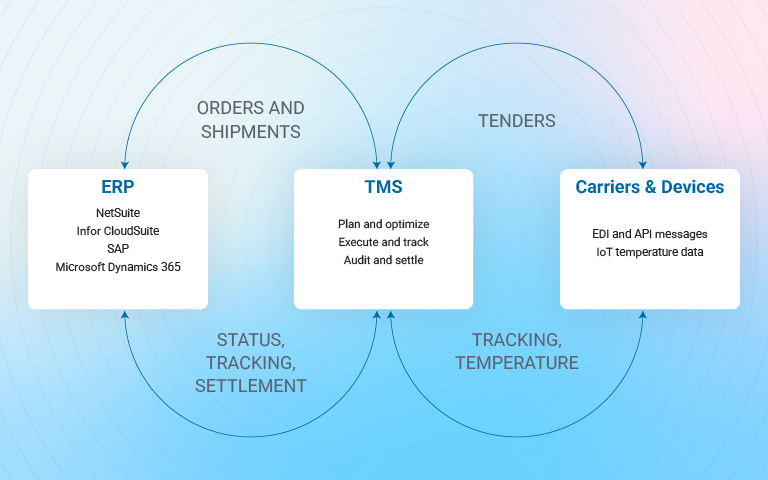
No. EDI complements a TMS by automating how data enters and exits the system. A TMS manages execution and workflows, while EDI ensures clean, timely data exchange with carriers.
Is EDI still relevant with APIs and AI?
Yes. EDI remains the most widely adopted and trusted standard for carrier connectivity in transportation. Many modern platforms use EDI as the foundation for APIs, real-time visibility tools, and AI-driven exception management.
Can EDI help with invoice disputes?
Yes. EDI automates invoice submission and supporting documentation, reducing errors and mismatches. This leads to faster audits, fewer disputes, and quicker carrier payment.
How does EDI support future logistics automation?
EDI provides the structured, reliable data required for advanced capabilities such as predictive ETAs, automated appointment scheduling, dynamic routing, and AI-driven shipment monitoring.