.svg)


Inside Shipwell's First-Ever User Group Conference


Key Takeaways

- The best insights came from the room itself. Customers arrived with their own challenges and left with solutions sourced directly from peers navigating the same operational realities.
- Seeing the platform's full potential changes the conversation. For many attendees, the conference reframed what Shipwell's TMS is already capable of today.
- Engagement like this doesn't happen by accident. From standing-room keynotes to late conversations on the Chicago River, attendees were genuinely present.
What happens when logistics leaders step away from the day-to-day and spend three days talking honestly about the work? You get something rare.
Shipwell's inaugural User Group Conference in Chicago brought customers together for an event that was equal parts education, strategy, and community. And what emerged from those conversations set a high bar for everything that follows.
A First-Ever Experience That Set the Bar High
Shipwell's first User Group Conference drew at-capacity attendance and generated the kind of organic engagement that no agenda can manufacture.
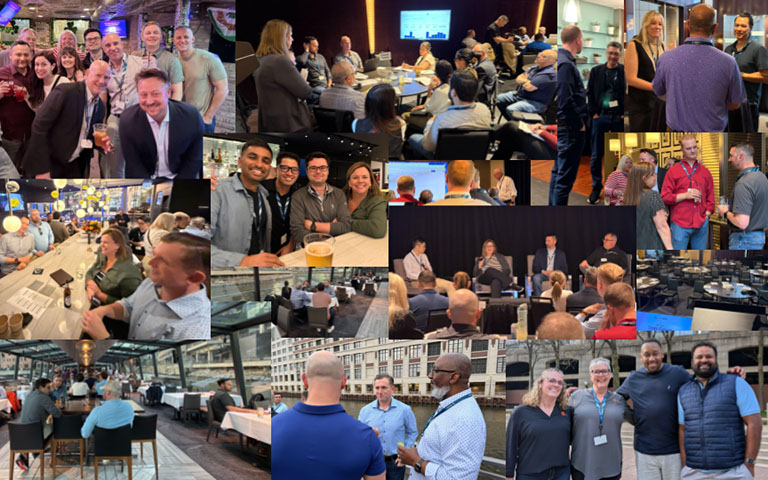
Sessions filled quickly; a few even turned into standing-room-only crowds. Yet the clearest signal wasn’t the headcount—it was the level of focus in the room. Participants posed pointed questions, pushed back on assumptions, and swapped ideas with peers they’d just met, testing one another on issues they’d been grappling with on their own for years.
Better yet, between sessions, that energy held. At the welcome reception, and later on the Chicago River Cruise Dinner, the city's skyline framed our talks. Discussions that began in the conference hall continued on the water. Phones stayed in pockets. People were simply present.
The event was made possible in part by sponsors DAT Freight & Analytics, enVista, Orderful, and Tive. Each partner brought insight that extended the value well beyond the main stage.
Customers arrived as professionals. They left as a community.
"I had the privilege of attending the first Shipwell Conference in Chicago, and it was an incredibly valuable experience. Exploring the platform in greater depth gave me a clearer picture of how its capabilities can support us as we continue strengthening and streamlining our logistics operations. Grateful for the opportunity to learn, connect, and bring back insights that will help drive our team forward."
"I couldn't believe how much we learned of changes that Shipwell has completed and new changes that are forthcoming."
"Kudos on a fantastic first user conference. It was expertly run, which is a real testament to your team's effort and organization."
Get An Inside View at Shipwell’s Future
The keynote and product roadmap session gave customers a detailed look at where the platform is headed, and concrete proof of what's already delivering results.
As Shipwell approaches its 10th anniversary in July, the scale of what its customers have built is striking. Every month, Shipwell customers collectively move 97.5 million miles of freight (or 408 trips to the moon!) That scale was achieved only because of our customers, who entirely fueled it.
The keynote used that milestone as context for a larger argument: the industry is shifting from the “Connection and Visibility Era” into what Shipwell calls the “Era of Action.” The platform is evolving from a system of record (where data is captured and stored) into a system of action, where that data drives decisions automatically. And Shipwell customers are leading that shift.
Customer outcomes at the conference made the argument concrete:
- Carrier payment cycles reduced from four weeks to one week, freeing teams for strategic work
- Document AI removed over $1 million in carrier backcharges
- Dock scheduling automation now turns carriers in 34 minutes
The product roadmap session reinforced these wins. It walked customers through features already live in the platform, and shared a clear path for what comes next. No other TMS platform matches Shipwell's current breadth across ERP connectivity, planning, execution, visibility, settlement, dock scheduling, and carrier integration. The roadmap makes clear that depth is only growing.
The destination is a more autonomous supply chain: one where routine decisions execute without intervention, disruptions surface the moment they occur, and logistics teams redirect their time toward work that requires human judgment.
See Strategy From a Different Point of View
Three logistics leaders shared perspectives on what remains genuinely difficult in transportation, and why solving the technical problems often isn't the hard part.
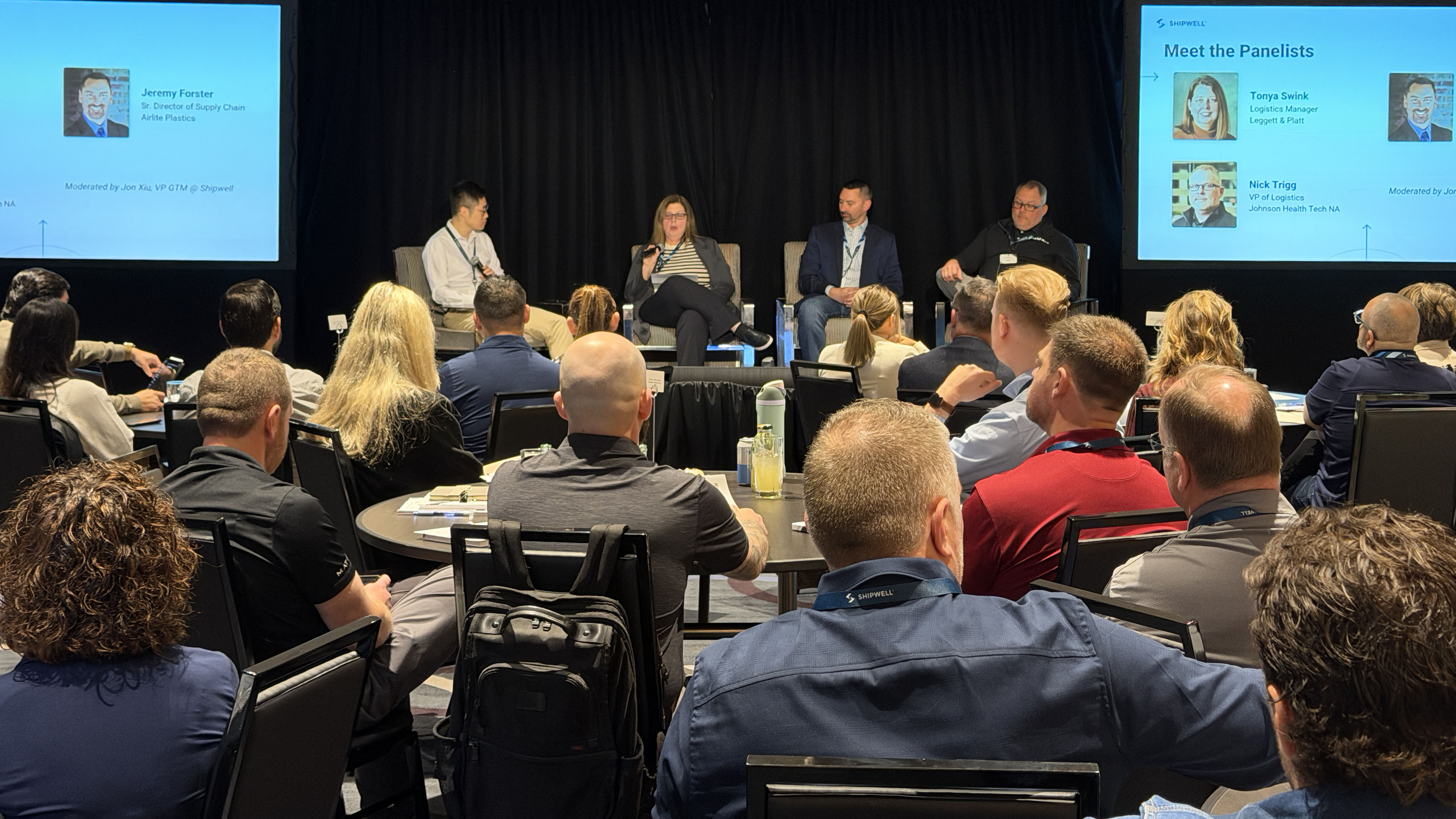
The customer panel featured Tonya Swink, Logistics Manager at Leggett & Platt; Jeremy Forster, Senior Director of Supply Chain at Airlite Plastics; and Nick Trigg, VP of Logistics at Johnson Health Tech NA. Rather than polished case studies, they offered candid assessments: where the work is still broken, what data has actually changed, and where instinct still earns its place.
Why Does Behavioral Change Remain the Hardest Problem to Solve?
When asked what still resists improvement, each panelist pointed to a version of the same root cause. Tonya named behavioral adoption, as technology advances faster than the willingness to change workflows, and logistics teams are often the last to shift.
Jeremy described the integration gaps between systems that force manual intervention and introduce unnecessary downtime. Nick framed the persistent challenge as a network design problem: rather than accepting the conventional tradeoff between speed, cost, and quality, his team has focused on building carrier relationships that provide enough flexibility to avoid being forced into that choice at all.
When Should a Data-Driven Decision Still Factor in Relationships?
On the question of which transportation decisions have migrated from instinct to data, the panelists offered a revealing range of views. Tonya described a deliberate carrier vetting approach: her team is precise about which carriers enter the system, which means a low-rate option is a confident selection, not a gamble.
Nick countered that data quality determines decision quality: when shipment records, carrier information, and location data are accurate, teams stop diagnosing discrepancies and start making forward-looking decisions.
Jeremy offered a counterpoint worth sitting with. Even in a data-rich environment, relationships determine access to constrained capacity. When a carrier has one truck to allocate and three shippers on the line, the decision isn't necessarily algorithmic. The question, he suggested, is whether automation can create enough operational bandwidth to invest in those relationships… not that data should replace them.
How Is AI Actually Changing the Daily Work of Logistics Teams?
Tonya’s point of view on AI echoed Shipwell’s own: it doesn't eliminate roles, but rather, changes them. The practical shift is from hiring people to enter and retrieve data to hiring people who can interpret it and focus on exception management—handling the disruptions, missed pickups, carrier delays, and scheduling anomalies that genuinely require human judgment. That's a fundamentally different job description, and a more valuable one at that.
In the lightning round, each panelist named an overhyped trend: Tonya cited AI, Jeremy flagged full automation, and Nick pointed to complete systems integration. The common thread was instructive. None of them dismissed these technologies, as each has built parts of their operation around them. The caution was against treating any single capability as an endpoint.
Automate the routine. That's when the relationships, and the people who build them, become the real differentiator.
Know the Market Before It Moves Against You
A dedicated “State of the Freight Market” session gave customers the analytical tools to plan confidently in a market defined by uncertainty.
Chris Doyle, Director of Analytics at DAT Freight & Analytics, led what many attendees cited as one of the most immediately applicable sessions of the conference. The focus wasn't just where rates are today, but how to use market data strategically, at the level of granularity that actually drives sound decisions.
National rate averages are a great starting point, but not a holistic strategy. Shippers who rely on broad market benchmarks are, at best, working with incomplete information and, at worst, making expensive decisions based on figures that don't reflect the lanes, carriers, or capacity constraints specific to their operation. Lane-level data is where meaningful planning happens.
When the audience asked about the impact of demand spikes and current policy initiatives, Doyle offered a useful corrective: the effects are often significantly overstated. Structural shifts in freight markets move more slowly than headlines suggest, and shippers who calibrate their planning to short-term noise rather than durable trends tend to make decisions with false precision—locking in rates or over-adjusting capacity at exactly the wrong moment.
The takeaway wasn't to ignore market signals. It was to understand which signals actually matter, at what resolution, and why reactive framing leaves shippers perpetually one step behind.
Hands-On Learning That Directly Benefits Your Business
Operational and IT Breakouts and Power Partner Roundtables moved the conference from inspiration to application, giving customers a clear path from insight to action.
What Did the Breakout Sessions Cover?
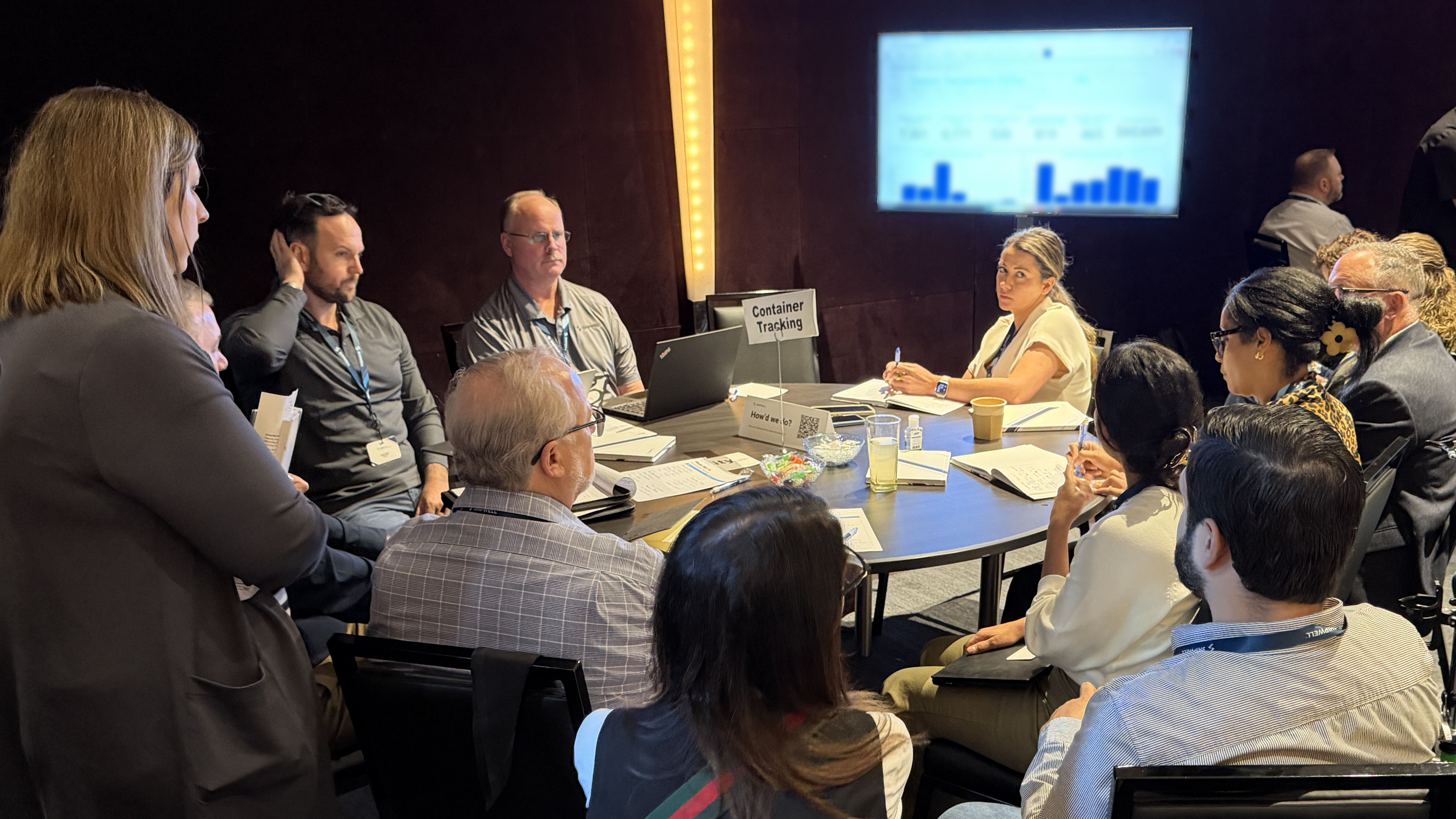
Small-group sessions were organized across two tracks so attendees could select topics aligned with their specific roles and priorities. Shipwell product leaders walked through key platform capabilities, including features many customers hadn't yet activated, while "Ask an Expert" tables gave attendees direct access to the people best positioned to solve specific operational challenges.
The format was deliberate. Smaller groups create conditions for genuine dialogue. Questions that might not surface in a 400-person auditorium come naturally when the table holds 20. Customers compared system configurations, exchanged solutions, and left with defined next steps as opposed to presentation slides.
What Did the Power Partner Roundtables Address?
Sponsors contributed in four roundtables, each targeting a distinct operational or strategic challenge:
- DAT Freight & Analytics led a roundtable on rate evaluation in an unstable freight market, and more specifically, how shippers can assess whether a rate is genuinely competitive when market conditions aren't standing still.
- enVista focused on value realization after go-live: how teams build on initial TMS adoption, drive sustained platform usage, and expand ROI over time rather than treating implementation as the finish line.
- Orderful led a structured diagnostic on supply chain friction, helping teams trace where operational pain originates versus where it appears. The insight: the root cause rarely lives where the symptoms surface.
- Tive explored how pallet-level IoT telemetry is moving beyond shipment tracking to enable workflow automation, improve carrier collaboration, and generate predictive insights when combined with AI—shifting operations from reactive alerts to proactive decisions.
Create New Connections
Like most conferences, the most durable outcomes weren't delivered in sessions, but rather, built in the spaces between them.
Across three days, attendees found peers who had faced the same challenges—and in many cases, had already worked through them. Before boarding the river cruise, one longtime Shipwell customer said she couldn't wait to take new ideas back to her team. That's the signal: when people are already thinking about implementation before the event ends, something real has happened.
What made the exchange substantive was specificity. Attendees discussed real platform configurations, real workflow decisions, and measurable results. Problems that felt unique turned out to be common. Solutions that felt out of reach turned out to be running at the company two seats over.
Shipwell's partner ecosystem reinforced the conversation throughout. DAT, Tive, enVista, and Orderful each contributed perspectives that extended what platform sessions could cover—giving attendees a more complete picture of the strategic and technical landscape they're navigating.
The right people in the right room can do remarkable things. The inaugural Shipwell User Group Conference set the route. And if the first leg is any indication, the journey ahead is worth showing up for.

Frequently Asked Questions
What was Shipwell's User Group Conference?
Shipwell's User Group Conference was the company's inaugural customer event, held April 13-15 2026 in Chicago, Illinois. It was sponsored by DAT Freight Analytics, enVista, Orderful, and Tive.
Who attended the Shipwell User Group Conference?
Attendees included current customers that are active in the Shipwell platform. The audience consisted of logistics managers, supply chain directors, VPs of transportation, and senior operations professionals from mid-market and enterprise companies.
What is Shipwell's product roadmap focused on?
Shipwell is transitioning its platform from a system of record to a system of action—where data drives automated decisions rather than simply being captured and stored. The roadmap prioritizes AI-powered workflows, deeper ERP connectivity, and automation capabilities that move customers toward a more autonomous supply chain. Capabilities already live include Document AI, dock scheduling automation, and broad carrier and partner integration.
What ROI have Shipwell customers reported?
Customers at the conference reported outcomes including carrier payment cycles reduced from four weeks to one week, more than $1 million in carrier backcharges eliminated through settlement AI, and dock scheduling automation that turns carriers in 34 minutes. These results reflect the platform's ability to reduce manual workload, accelerate cash flow, and strengthen carrier relationships simultaneously.
What is the Era of Action in transportation management?
The “Era of Action” describes the current shift in how transportation management platforms operate—moving beyond tracking and reporting toward systems that initiate and execute decisions automatically. Rather than alerting a team that a shipment is at risk, a platform in the Era of Action adjusts, reschedules, or escalates based on defined logic, reducing the number of decisions that require manual intervention.
How is AI changing the role of logistics professionals?
AI is shifting logistics roles from data entry and retrieval toward data interpretation and exception management that genuinely require human judgment.
Why does data quality matter more than data volume in logistics?
Accurate transportation decisions depend on accurate inputs. When shipment records, carrier data, and location information are inconsistent, teams spend time diagnosing discrepancies instead of making forward-looking decisions. Clean data produces clear decisions—which means fewer reactive interventions, less time absorbing operational problems, and more capacity for strategic planning.
What role do carrier relationships play in a data-driven logistics operation?
Data and relationships are complementary priorities. Data-driven operations create the efficiency that frees teams to invest in relationships. The goal of automation is to generate enough operational bandwidth to maintain and build those connections.
What topics were covered in the breakout sessions?
Breakout sessions were organized across Operations and IT tracks, covering key platform capabilities and "Ask an Expert" tables where attendees could work through specific challenges directly with Shipwell product leaders. The small-group format encouraged candid dialogue and left attendees with concrete action items rather than general takeaways.
Will there be another Shipwell User Group Conference?
Based on the response to the inaugural event, Shipwell is committed to continuing to build its customer community. Multiple attendees expressed anticipation for a future conference, and the depth of engagement across three days demonstrated clear demand for this kind of structured peer exchange.